
History Of Pannett Park
Robert Elliott Pannett bought the land which was to become Pannett Park in 1902. It was then used mainly for orchards,
nurseries and market gardens. Mr Pannett spent many years trying to persuade the Whitby Urban District Council to make it
into a park which, he argued, would be good for local people and visitors alike. In his opinion the town needed somewhere
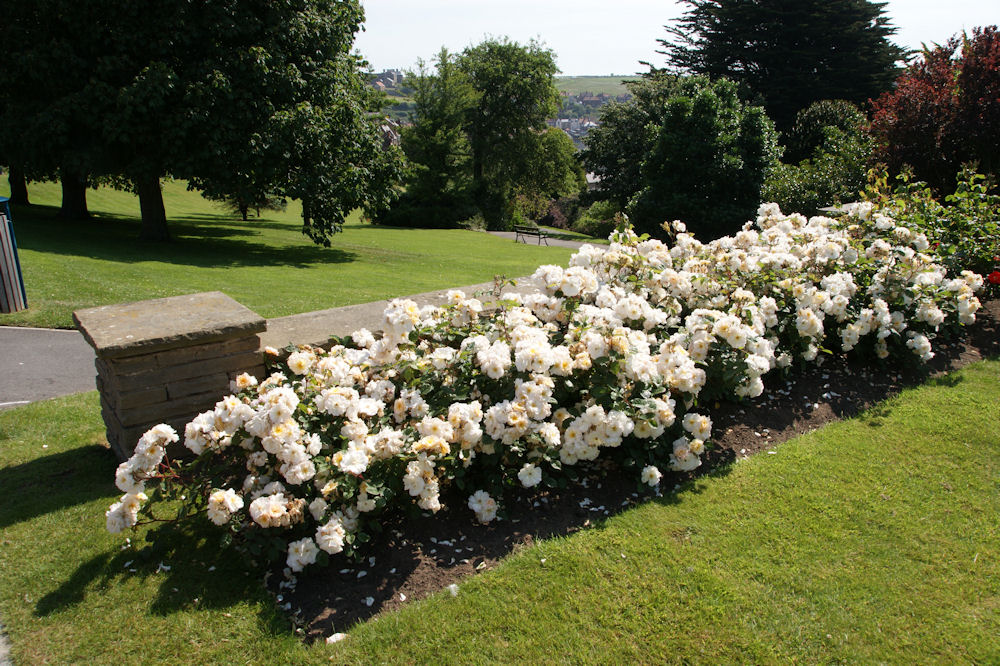
sheltered from the sea winds where everyone could enjoy fresh air, trees and flowers in contrast to the cliffs and the beach.
The Council, however, were unwilling to finance such a project and it was only when Mr (by then Alderman) Pannett died that
anything was done. He set up a Trust to create the park and an art gallery which would house his art and other collections.
The park was designed by a firm of landscape designers and nurserymen from Darlington, under the direction of Mr Walter
Brydon, and the art gallery by Hays and Gray, architects from Co. Durham. The latter also designed the Museum which was built
a little later behind the gallery by the Whitby Literary and Philosophical Society who wanted to move from their cramped premises
on the harbourside. The foundation stone for the art gallery was laid in 1927 and it and much of the park were opened the next year.
Once the Museum was finished the Trust was wound up.
Photo Property of Whitby Literary & Philosophical Society
The design of the park proved robust and in essence it survived the changes which inevitably occurred in the ensuing 70+
years but, as was the case in public parks throughout the country, ever fewer resources were spent on care and maintenance.
By the millenium the park was looking neglected. The Friends of Pannett Park, formed in 2005, set in train the bid for the HLF grant
now being used to refurbish it. As one item in that bid, an illustrated history of the park, written by Anne Dennier, will be published
in the autumn and, at the same time, there will be an exhibition on the times and achievements of Alderman Pannett in the Whitby
Museum.
Written By: Anne Dennier
Who Was Robert Elliott Pannett?
Pannett Park exists thanks to the generosity of Robert Elliott Pannett. A Whitby solicitor spent his life in local government and in service to his fellow
townspeople. After 22 years as Clerk to the District Local Board he became a County Councillor and later Alderman. He was a J.P., a Director of Whitby
and North Yorkshire Building Society, Chairman of Whitby Waterworks, a life Governor of the Cottage Hospital and a supporter of many charities.
When he learned that Chubb Hill Estate, then market gardens, was for sale, he bought it to give to the town. In his will dated October 1917 he arranged
for it to become a public park. and if deemed expedient by my Trustees as a site for the erection of a public museum … for the reception and preservation
of my water colour drawings, works of art, objects of natural history and other things …".
What he called the public museum is the Art Gallery, opened in 1928, while the present museum as a separate but adjoining building, a story in itself,
was a later addition.
Pannett of course did not live to see his intent fulfilled. He died on 22nd July 1920 and was buried in Whitby cemetery four days later – there is a
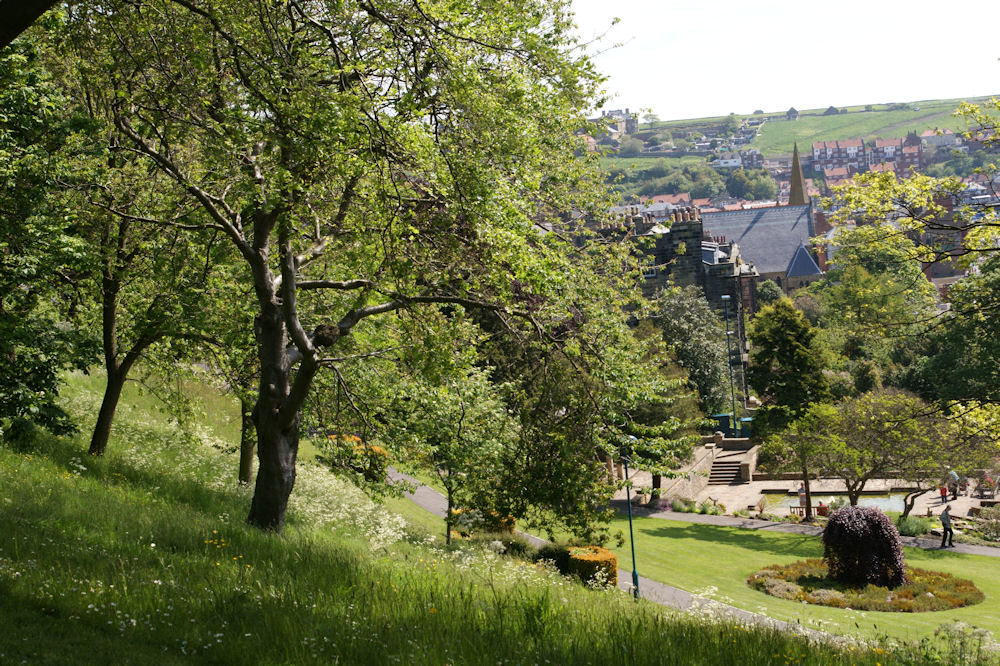
plain gravestone but no monument to mark the spot. His real monument is rather to be seen as one stands on the steps of the Art Gallery and looks over
the park towards the town of which he was so noteworthy a son.
History of the Floral Clock
The Floral Clock in Pannett Park was originally installed in 1953 to commemorate the coronation of Queen Elizabeth II on June 2nd 1953.
During the autumn of 1952 various ideas were discussed for ways to commemorate the coronation, with a general consensus that it should be a feature of
a permanent nature. On 12th September at the Executive Committee meeting of the Whitby Chamber of Trade, John Tindale suggested that the Chamber
might provide the mechanism for a Floral Clock.
Over the coming weeks the Whitby Gazette reported on progress with this idea, and on 17th October, reported "The suggestion … has found considerable
favour, and the project was further discussed at the meeting of the executive on Friday night. Pictures of floral clocks in other towns were handed round,
and these included the clock at Ostend. A local man was on holiday at the Belgian town when he received a copy of the Whitby Gazette which contained
a report of the … suggestion made by John Tindale. He was sitting opposite the clock when he read the report, and at once bought a postcard picture of
the floral clock and sent it to the Chamber of Trade." The report also went on to say enquiries had been made regarding the cost of the clock and "the
lowest estimate was in the neighbourhood of £249."
By November the project was agreed and on 21st the Whitby Gazette reported "Whitby is to have a floral clock to commemorate the Queen's coronation
next year. This was unanimously decided at a meeting of the Executive Committee of Whitby Chamber of Trade. The Executive decided to go ahead with the
project even though the full amount of the cost had not yet been subscribed … so far promised was £150 11s, and over £70 was still required."
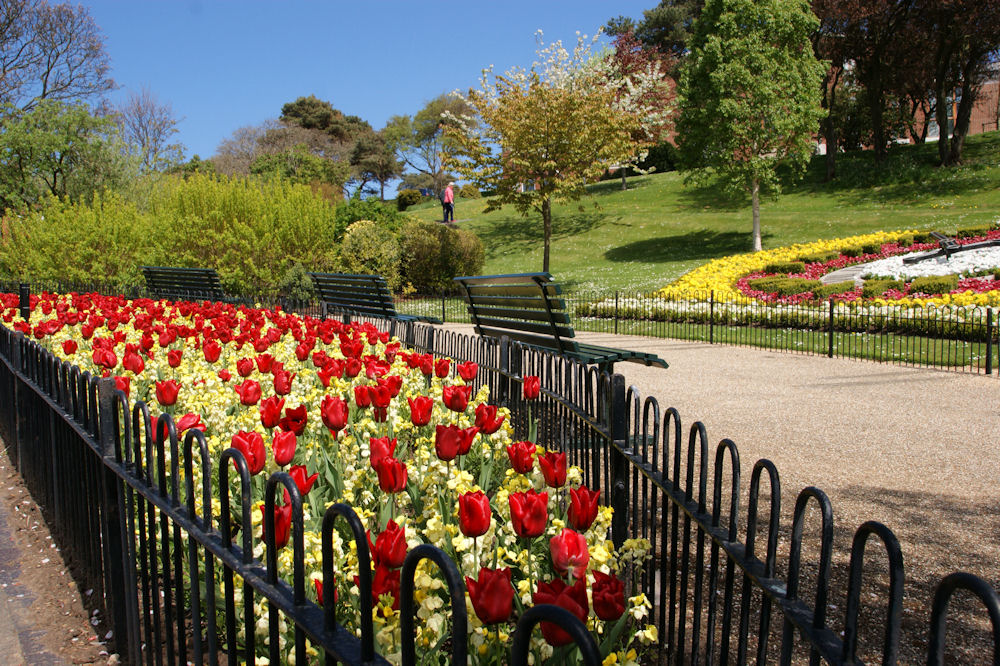
The clock was installed in the Spring of 1953 and for many years its fabulous floral displays were a much loved feature of Pannett Park and Whitby.
Each year a different theme was chosen and the planting depicted various logos and pictures. At one time a water fountain even circled the clock.
Unfortunately by 1979 the clock had fallen into disrepair, its hands were removed and the planting reverted to a normal flowerbed. It remained like this
for 27 years until in 2006 the Friends of Pannett Park secured grants and sponsorship to reinstate the clock, create the Whitby Time Line, and carry out
landscaping improvements to the surrounds.
Click Here to see more photos of Pannett Park's Floral Clock.